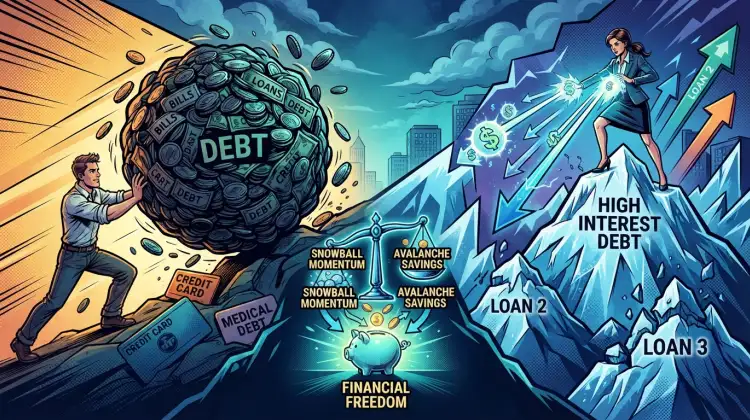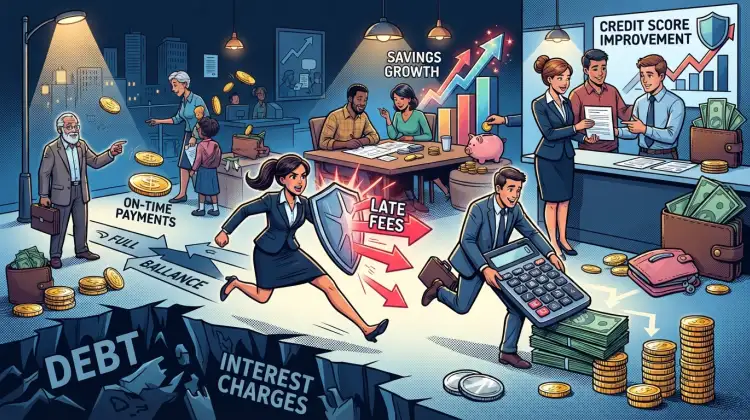
Credit card interest is one of the most expensive forms of borrowing available to US consumers. According to the Federal Reserve, the average annual percentage rate (APR) on credit cards that assess interest has hovered above 20% in recent years — a level that can turn a modest balance into a long-term financial burden. The good news is that interest on a credit card is largely optional. With the right habits and a clear understanding of how issuers calculate charges, most cardholders can keep their APR at zero indefinitely. This guide explains the mechanics behind credit card interest and gives you concrete steps to avoid paying it.
Understand the Grace Period — Your Most Important Tool
Most US credit cards offer a grace period: the window between the end of a billing cycle and your payment due date during which no interest accrues on new purchases. Under the Credit CARD Act of 2009, issuers must mail or deliver statements at least 21 days before the due date, which effectively guarantees a minimum grace period of three weeks on purchase balances.
Two rules govern the grace period:
- It applies to purchases only. Cash advances and balance transfers typically begin accruing interest immediately, with no grace period.
- It is forfeited if you carry a balance. Once you owe interest on purchases, new purchases generally start accruing interest from the transaction date until you pay the statement balance in full again.
The practical takeaway: pay your statement balance — not just the minimum — by the due date every month. That single habit is the foundation of avoiding credit card interest.
Pay the Statement Balance, Not the Minimum
Minimum payments are designed to keep accounts in good standing, not to eliminate debt. A minimum payment is often 1%–3% of the balance plus accrued interest, which means a large share of each payment goes toward interest rather than principal. On a $5,000 balance at a 22% APR, paying only the minimum could keep you in debt for well over a decade.
Instead, set up autopay for the full statement balance. Most major issuers — Chase, Bank of America, Capital One, Citi, and others — let you choose "statement balance" as your autopay amount. This protects you from forgetting a due date and from the penalty APR that can follow a missed payment.
Time Large Purchases Around Your Billing Cycle
Because the grace period runs from the statement closing date to the due date, the date you make a purchase affects how long you have to pay it off interest-free. A purchase made the day after your statement closes may not appear on a bill for nearly a month, giving you close to 50 days of float before payment is due. A purchase made the day before your statement closes gets only about 21–25 days.
If you are planning a large expense — a medical bill, a home repair, or holiday shopping — check your statement closing date first. Shifting the purchase by a few days can buy you several extra weeks of interest-free time, provided you have the cash ready by the due date.
Use 0% APR Offers Strategically — and Carefully
Many US issuers offer introductory 0% APR periods on purchases or balance transfers, often ranging from 12 to 21 months. These can be legitimate tools for financing a large purchase or paying down existing debt without interest, but they come with conditions:
- Balance transfer fees typically run 3%–5% of the amount transferred, which is a real cost even at 0% interest.
- Deferred interest promotions (common with store cards) are different from true 0% APR: if you don't pay the full balance by the end of the promotional period, interest is retroactively charged from the purchase date.
- The post-promotion APR can be high, so have a payoff plan before the intro period ends.
Read the cardholder agreement and confirm whether the offer is a true 0% APR or deferred interest before you commit.
Reduce the Balance You Carry in the First Place
Avoiding interest is easier when your balances are small. Practical steps include:
- Pay more than once a month. Making a mid-cycle payment lowers your average daily balance, which is how most issuers calculate interest if you do carry a balance.
- Use a debit card or cash for discretionary spending while you pay down existing balances.
- Ask for an APR reduction. A single phone call to your issuer can sometimes lower your rate, especially with a long payment history.
- Consider a nonprofit credit counseling agency if you are struggling with multiple balances; agencies affiliated with the National Foundation for Credit Counseling offer debt management plans that can reduce rates.
Watch for Hidden Interest Triggers
Even disciplined cardholders can be caught off guard. Common triggers include:
- Cash advances, which often carry a higher APR and a transaction fee, with no grace period.
- Penalty APRs, which issuers may apply after a payment more than 60 days late.
- Foreign transaction fees on cards that charge them, typically 3% of the purchase.
- Returned payments, which can trigger fees and, in some cases, a rate increase.
Review your cardholder agreement so you know exactly which transactions fall outside the grace period.
What to Remember
Avoiding credit card interest comes down to a few repeatable behaviors: pay the full statement balance by the due date, use autopay to prevent slips, understand your grace period and billing cycle, and treat 0% APR offers as tools rather than free money. If you do carry a balance, attack it with extra payments and consider a lower-rate option such as a balance transfer or a nonprofit debt management plan. Interest is a cost you can control — and with consistent habits, most cardholders can keep it at zero.