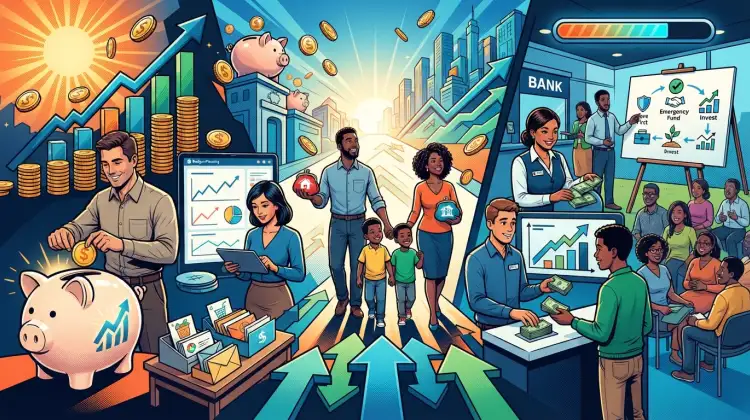
Most people know what they should do with money: spend less, save more, avoid high-interest debt. The gap between knowing and doing is where financial progress stalls. Building good money habits closes that gap by turning sound decisions into automatic behavior, so you are not relying on willpower every time a paycheck lands or a sale pops up. This guide explains how habits form, which financial habits matter most, and how to make them stick using systems that fit real American budgets.
Why Habits Beat Willpower
Behavioral research consistently shows that willpower is a limited resource. Decisions made under stress or fatigue tend to favor short-term comfort, which is why so many budgets collapse by the second week of the month. Habits remove the decision entirely. When saving, tracking, and bill-paying become routines, you stop negotiating with yourself.
The Federal Reserve's Survey of Consumer Finances repeatedly finds that a large share of U.S. households could not cover a $400 emergency expense with cash. That statistic is less about income than about the absence of a routine that quietly sets money aside. A habit of transferring a small amount to savings every payday prevents that scenario far more reliably than an annual resolution to "save more."
The practical takeaway: design your environment so the right choice is the default. Automate transfers, set calendar reminders, and remove friction from good decisions while adding friction to impulsive ones.
Start With a Spending Awareness Habit
You cannot improve what you do not measure. Before optimizing, spend two to four weeks simply tracking where money goes. This is not about judgment; it is about data. Most people are surprised by how much leaks out through subscriptions, delivery apps, and small impulse purchases.
- Use one method consistently. A spreadsheet, a budgeting app, or your bank's built-in spending categories all work. Consistency matters more than the tool.
- Review weekly, not daily. A ten-minute weekly check-in is sustainable; obsessing over every transaction is not.
- Group spending into three buckets: fixed bills, flexible needs (groceries, gas), and discretionary wants. This makes trade-offs obvious.
Once you see the pattern, you can set realistic targets instead of aspirational ones. A budget you can actually follow beats a perfect budget you abandon.
Automate Saving and Bill Paying
Automation is the single highest-leverage habit in personal finance because it works whether or not you are paying attention. Set up recurring transfers from checking to savings on the day after each paycheck. Even $25 per pay period builds momentum and, at typical high-yield savings account rates, earns meaningful interest over time.
Pair this with automatic bill pay through your bank or credit union. Late fees and overdraft charges are among the most avoidable costs in a household budget. Scheduling payments a few days before due dates protects your credit score and your cash flow.
A commonly cited starting framework is the 50/30/20 split: roughly 50% of take-home pay to needs, 30% to wants, and 20% to savings and debt repayment. Treat it as a starting point, not a rule. In high-cost housing markets, needs may consume more than half, and that is a signal to adjust rather than give up.
Build an Emergency Fund in Stages
An emergency fund is the foundation that keeps a single car repair from becoming a credit card balance. Conventional guidance suggests three to six months of essential expenses, but that target can feel impossible from zero. Build it in stages instead:
- Starter cushion: $500 to $1,000 in a separate high-yield savings account.
- One month of essentials: enough to cover rent, utilities, food, and insurance for 30 days.
- Three to six months: the full target, adjusted for your job stability and household income variability.
Keeping this money separate from your checking account reduces the temptation to spend it. Name the account something specific, like "Emergency Fund," to reinforce its purpose.
Handle Debt With a Repeatable Routine
Debt repayment succeeds when it is systematic. Two approaches dominate: the avalanche method, which targets the highest interest rate first to minimize total interest paid, and the snowball method, which pays off the smallest balance first for psychological wins. Either works if you apply it consistently.
Make minimum payments on every account automatically, then direct any extra money to your target debt. Review your progress monthly and adjust as income changes. If you carry balances, check your credit report annually at AnnualCreditReport.com and verify your interest rates, since a single missed payment can trigger a penalty rate.
Make Habits Stick With Small, Specific Cues
Vague goals fail. "Be better with money" gives your brain nothing to act on. Instead, attach a specific action to an existing routine:
- After each paycheck deposits, transfer $50 to savings.
- Every Sunday evening, review last week's spending for ten minutes.
- On the first of the month, pay any variable bills and check your budget categories.
Track streaks, not perfection. Missing one week is normal; the habit is broken only when you stop returning to it. Pair the routine with a visible reminder, such as a calendar alert or a note on your phone, until it becomes automatic.
What to Remember
Good money habits are built from small, repeatable actions rather than dramatic overhauls. Start by tracking spending for a few weeks, automate savings and bill payments, build an emergency fund in stages, and apply a consistent debt repayment method. Attach each habit to a specific cue and review progress weekly. Over a year, these routines compound into real financial stability, and they keep working long after motivation fades.