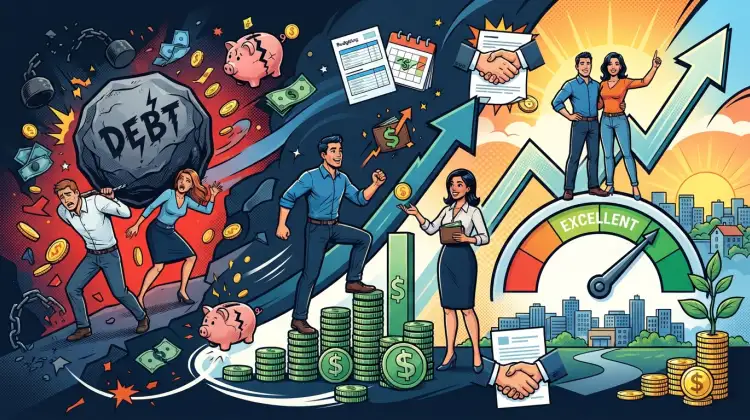
Your credit score is one of the most consequential numbers in your financial life. It influences whether you're approved for a credit card, auto loan, or mortgage, and it determines the interest rate you'll pay on that borrowing. In the US, most lenders use FICO scores, which range from 300 to 850, or VantageScore, which uses the same range. According to FICO, a score of 670 to 739 is generally considered good, 740 to 799 is very good, and 800 and above is exceptional. The good news is that credit scores are built from data you can influence. Here's how to improve yours methodically.
Start by Checking Your Credit Reports for Errors
Before you change any behavior, verify that the underlying data is accurate. You're entitled to one free credit report every 12 months from each of the three nationwide credit bureaus—Equifax, Experian, and TransUnion—through AnnualCreditReport.com, the only federally authorized source. Many consumers also have access to free weekly reports through that site.
Review each report line by line and look for:
- Accounts that aren't yours, which may indicate identity theft or a mixed file
- Payments reported late when you paid on time
- Duplicate collections or balances reported incorrectly
- Incorrect personal information, such as a wrong address or employer
If you find an error, dispute it directly with the credit bureau and, in many cases, with the furnisher (the lender or collector). Under the Fair Credit Reporting Act, bureaus generally must investigate disputes, usually within 30 days. Correcting a single serious error—such as a collection account that isn't yours—can move your score meaningfully.
Pay Every Bill on Time, Every Time
Payment history is the single largest factor in FICO scores, typically accounting for about 35% of the calculation. A single missed payment can stay on your report for up to seven years, though its impact fades over time. Set up autopay for at least the minimum on every account, and use calendar reminders or your bank's alerts for due dates.
If you've missed a payment, bring the account current immediately. Many lenders will not report a payment as late until it's 30 days past due, so acting within that window can prevent damage. If you're struggling, contact your lender before the due date—many offer hardship programs, and a documented arrangement is better than silence.
Lower Your Credit Utilization Ratio
Amounts owed, often measured as credit utilization, is the second-largest factor, typically around 30% of a FICO score. Utilization is your balance divided by your credit limit, calculated both overall and per card. Experts commonly recommend keeping utilization below 30%, and below 10% is better for optimizing scores.
Practical ways to reduce utilization:
- Pay down balances before your statement closing date, since that's when most issuers report to the bureaus
- Make multiple payments per month on cards you use heavily
- Ask for a credit limit increase on existing accounts (a soft or hard inquiry may apply—ask first)
- Avoid closing old cards, which reduces your total available credit
Build Positive History and Manage New Credit Carefully
Length of credit history (about 15% of a FICO score) rewards accounts that have been open a long time. Keep your oldest no-fee cards open and use them lightly. Credit mix (about 10%) benefits from a blend of revolving credit like cards and installment loans like auto or student loans, though you shouldn't take on debt just to diversify.
New credit inquiries (about 10%) matter too. Each hard inquiry can ding your score by a few points, and multiple applications in a short period signal risk. Rate-shopping for a mortgage or auto loan is typically treated as a single inquiry if done within a focused window, but opening several store cards in one shopping trip is not.
If you have thin or damaged credit, consider a secured credit card, which requires a cash deposit and reports to the bureaus like a regular card. Used responsibly, it builds positive history. A credit-builder loan from a community bank or credit union is another option.
Be Patient and Monitor Progress
Credit repair takes time. Late payments and collections age off after seven years, and bankruptcies can remain for seven to ten years depending on the type. Meanwhile, consistent on-time payments and declining balances improve scores month by month. Check your reports regularly, keep utilization low, and avoid unnecessary applications. Most people see meaningful improvement within three to six months of disciplined behavior, and larger gains over a year or more.
What to Remember
- Pull your free reports from AnnualCreditReport.com and dispute inaccuracies first.
- Protect your payment history—it's the biggest scoring factor.
- Keep credit utilization well under 30%, ideally under 10%.
- Keep old accounts open and apply for new credit sparingly.
- Expect gradual improvement; there are no legitimate instant fixes.